From the totting up of the 5 November elections results which showed no party winning a ruling majority in Parliament until the leaders of the three leading parties, whose votes in sum came to nearly 98 percent of those cast, agreed on 21 November to form a new government together, public affairs remained up in the air in this country. The only exception was the economy, the nation’s most desperate concern, which kept digging itself deeper into the ground each day.
For a fortnight mandates, as required by the constitution, were handed doggedly around from party to party, and when none could be found to form a government, a fourth mandate was assigned for all parties to put their heads together with the president and find a way out of the stalemate. And this is what they did.
During these days when Greece wallowed in its local political limbo, its northern neighbors were hyper-active; (7 Nov) daily exodus of East Germans to the West topped 20,000; (8 Nov) East Germany appointed liberal prime minister; (9 Nov) East Germany opened its borders; (10 Nov) Bulgarian strongman Zhivkov resigned after a 35-year rule; (11 Nov) parts of the Berlin Wall dismantled; (13 Nov) massive rallies in Estonia; (15 Nov) Walesa in US called for Marshall Plan for Eastern Europe; (16 Nov) Czech borders opened; (19 Nov) 50,000 rally in Sofia; (20 Nov) 100,000 rally in Prague.
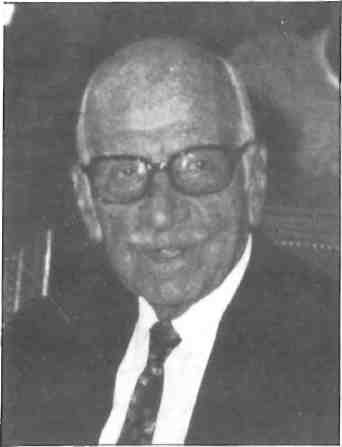
Then on 21 November, while 200,000 were gathered in Wenceslas Square, the three Greek political leaders, Messers Mitsotakis, Papandreou and Florakis, along with President Sartzetakis, proudly announced that they had agreed on the formation of an ecumenical (sic) government to be led by the 85-year-old economist, Xenophon Zolotas.
Although jokes at once circled about the age of the newly-appointed prime minister (mostly along the lines that if someone merely middle-aged had been picked, he would soon oust all the present party leaders), Professor Zolotas is extremely spry. One of the reasons for his quickness of mind and trimness of figure, is that he takes a daily swim in the sea even in mid-winter, and it is the opinion of the octogenarian that a cold plunge is just the thing to reinvigorate the flabby and overheated economy.
If the word ‘ecumenical1 applied to the government means anything more than that the three leading parties support it, then it means that Professor Zolotas is one of the few figures in Greece today who commands wide respect abroad and for decades has been an economist of world repute.
Xenophon Zolotas studied law and economics at the universities of Athens, Leipzig and Paris. At the tender age of 30 he headed the Greek delegation at the Economic Council of the Balkan Entente. As a joint governor of the Bank of Greece right after the liberation of Greece in 1944, he is credited with the miraculous economic recovery of the devastated country.
From 1946 to 1947, he represented Greece at the IMF and at the UN from 1948 to 1953. He was one of the four economists to propose the creation of the OECD in 1960 and served as Governor of the Bank of Greece from 1955 to 1981 with the exception of the seven year period of the military dictatorship. He was elected to the Academy of Athens in 1952.
Although he has never belonged to a political party, nor has he ever run for parliament, Mr Zolotas has been associated with both Mitsotakis and Papandreou in the past, having had both as students while teaching law at the University of Athens in the 1930s. And given the on-going Aesop’s fable of the Fox and the Stork in which the two politicians have been appearing as protagonists for the last quarter century, it is characteristic that it was Mitsotakis who proposed the appointment of the veteran economist to the others and Papandreou who told TV listeners later that it had been PASOK which had “undertaken the overall initiative”.
The next day a cabinet was formed which included figures from all leading parties in proportion to the number of votes each had won, as well as seven members held over from the caretaker Grivas government it was replacing.
In creating the new ecumenical administration, the three leading parties agreed that the present government would end its tenure by April at which time presidential elections must take place; that the present electoral law (an unreinforced proportional system which has made an outright majority impossible to obtain in the last two elections) will remain the same through the next elections; and that the three party leaders shall meet weekly.
The main concern of the government is the rapidly deteriorating economy. The bargaining before the announcement of the new government and the jostling that had been going on since are being handled (or juggled) by National Economy Minister George Yennimatas (PASOK), Alternative Minister Yiannis Dragassakis (Alliance of the Left) and Finance Minister George Souflias (ND).
Although Andreas Papandreou has maintained all along that the economy was in lusty condition at the time that his government was ousted in June and has only fallen apart since then, Mitsotakis has gloomily repeated that every man, woman and child would have to work gratis for a year to get the country out of debt. Most people expected the worst and that is what they got.
Like archery experts, the new economic ministers boldly started setting up targets. Among these, the vast public deficit was to be chipped away by reducing public expenditure to one percent of the GDP; increasing taxes on high incomes; hiking the costs of utilities and public transport; raising more revenue from ‘sinful’ products and freezing further employment in the grossly overstaffed public sector. With less than 10 million people, Greece has 220,000 regular civil servants; another 100,000 who are temporarily employed and 300,000 pensioners. The burden is insupportable and the targets too vague.
In his first address to Parliament, the pragmatic professor made it plain that there could be no banking on miracles; that the Greek people could not expect the government to achieve an economic recovery by itself.
He reminded his listeners that citizens, too, have obligations as well as rights, and a feeling of insecurity among workers could best be overcome by improving the quality of services and by increasing productivity.
The implication, of course, is that the policies of administrations for more than a decade, in their rooting for votes, have encouraged over-in-dulgence, corrupted supporters with handouts, pampered the public with socializations and unaffordable benefits, and run state agencies in a wasteful and unbusinesslike manner.
Speaking from a long life of experience, Professor Zolotas, at his first cabinet meeting, told his colleagues that “the problems confronting this country are acute, and if we just sit and wait, putting off solutions, they will worsen further”. Muddling the problem of the immense deficit in the public sector is the inflation rate, four times that of the EC average, and rising. “At this time,” he warned, “there are new inflationary pressures. And since the conditions for steady economic and social developments are lacking, inflation must be combated at once. He reiterated that the drachma would not be devalued, but that it would be allowed to slide. “Above all, we should inspire in the people a feeling of sobriety and credibility; convince them that we are serious; that we are determined to take measures; that we will not surprise them every so often with emergency measures.” On 2 December, the government won an overwhelming vote of confidence in parliament. Of the 300 MPs, 292 voted in favor; one (of the Alternate Ecologist Party) against; two PASOK delegates simply stated their presence; and five were absent.
In making out his economic prescription, Prime Minister Zolotas decided that citizens had to take their medicine like grown-ups. Passing on his austere directives to his younger colleagues, the troika of financial ministers announced the next day certain measures that were as unclear as they would certainly be unpopular, and it took another three days for them to spell out the facts: electricity, up 13 percent; telephone, up 12 percent; railway fares, up 12 percent; water and postage, up 18 percent; and so forth. Everybody groaned; the stock market plunged; like Peter Pan, no one wanted to grow up, and above all, the ecumenical economists dragged their feet in order not to offend their constituents.
Meanwhile, the prime minister set off to attend the EC summit in Strasbourg where he did not hesitate to say that Greece held a world record in the proportional size of its budget deficit (23 percent of the Gross National Product). At the same time he buffed up Greece’s tarnished image abroad by proposing a plan setting up a reserve bank to help out Eastern European countries. It may have been the only internationally practical and creative idea that Greece has come up with in the last decade.
People at home remained unhappy. On his return, when it was suggested that his government was hedging, the Premier replied testily, “What do you expect from a government of 10 days? To perform miracles? To solve all the problems that have been plaguing the country for years?”
As December progressed, populist ministers were still insisting on what they called “socially tolerable” measures, and not a single specific item had been proposed in the way of budget cuts. The problem was not simply to stop the expansion of public indebtedness but to reduce it. How else could the country gain credibility and get future loans at a lower interest rate? Meanwhile, how were pensions to be paid at the end of the year, let alone that 13th month wage bonus?
The concern felt by the OECD and the EC on Greece’s economic plight was clearly reflected in a press conference held by European Commissioner, Vasso Papandreou. “Greece,” she said, “must intensify and increase its efforts if it does not want to find itself on the fringes of Europe. We live in a period of terrifying developments and challenges in Europe, and whoever does not participate is simply placed on the margins.”
“There would be,” she said, “three groups of European countries in the near future, the first consisting of those fully participating in economic and monetary union; those that have been left behind; and finally those in Eastern Europe. If Greece is to participate in the first group, it needs to be a steady currency, with a much smaller rate of inflation, much smaller deficits and a better balance of payments.