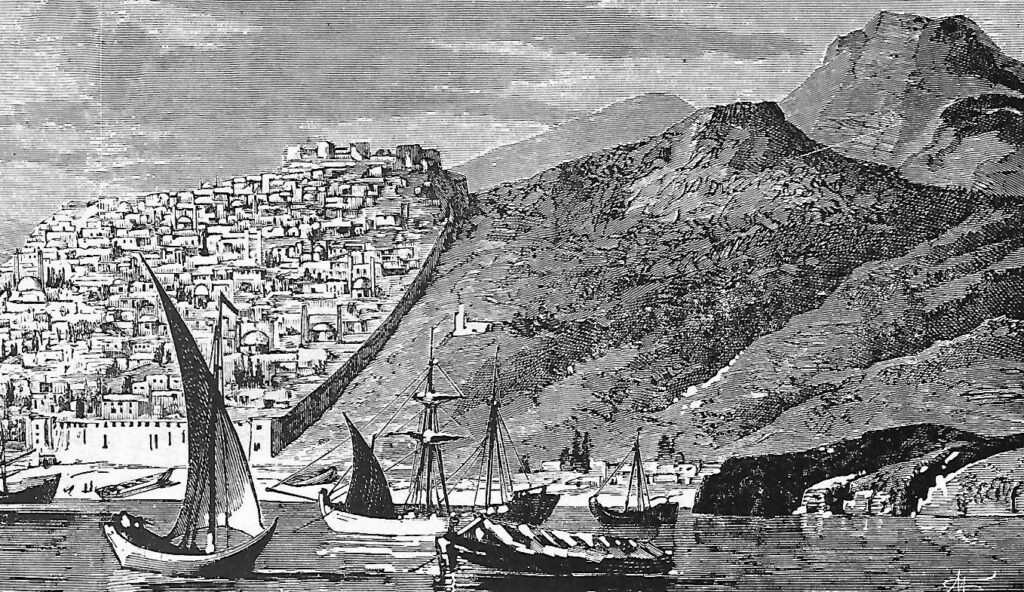
Salonica — Thessaloniki to most Greeks — was founded in 315 B.C. by Cassander, who named it after his wife, a sister of Alexander the Great. As a great Aegean port, which supplied trade routes into the Central Balkans, this city attracted conquerors; it has been either ruled or attacked by almost every neighbouring country and power.
The unique composition and international significance of Salonica were never more apparent than during the first decade of this century. The Ottoman Turkish Empire had ruled the metropolis since 1430, but Austria-Hungary and Italy both had designs on it. Meanwhile, the smaller states of Bulgaria, Greece, and Serbia nurtured ambitious irredentist programs directed towards ousting the Turks from Europe.
The expansionist goals of these Balkan states conflicted with each other as the three nations generously supported propaganda campaigns and guerrilla activity in Macedonia. Yet the largest group in the ethnic mix of Salonica neither participated in the power struggle nor could ever hope to control the city politically. These were the more than sixty-thousand Jews in Salonica comprising over forty percent of the total population. They spoke an essentially Spanish dialect and according to George Horton, the American consul, were “the picturesque Jews of Shakespeare’s time, wearing beards and long gabardines lined with fur”. And in a city with the three Sabbaths of Christianity, Islam, and Judaism, it was on Saturday, the Jewish Sabbath, when the town and port came to a virtual standstill. In relative terms, it was perhaps the most Jewish city in Europe.
Records indicate that the first Jews in Salonica. probably came from Alexandria around 140 B.C. Two centuries later, the Aspostle Paul found a strong community there, but after speaking in the synagogue for three consecutive Sabbaths he was forced to leave town. The number of Jews, however, remained small in relation to the larger Greek population until the last decade of the fifteenth century. The rulers of Spain, Ferdinand and Isabella, in their attempt to impose religious and political uniformity on the Iberian peninsula, ordered the expulsion of all Jews in 1492.
These Spanish, or Sephardic, Jews scattered in several directions, but in a period of general religious intolerance in Christian Europe many of them sought out the comparatively tolerant confines of the Islamic Ottoman Empire. The Turkish rulers recognized that they could exploit the commercial, artistic, and technological skills of these displaced people. Sultan Bayezid II reportedly stated before his advisers: “They say that Ferdinand is a wise monarch. How could it be so, he who impoverishes his country to enrich mine.”
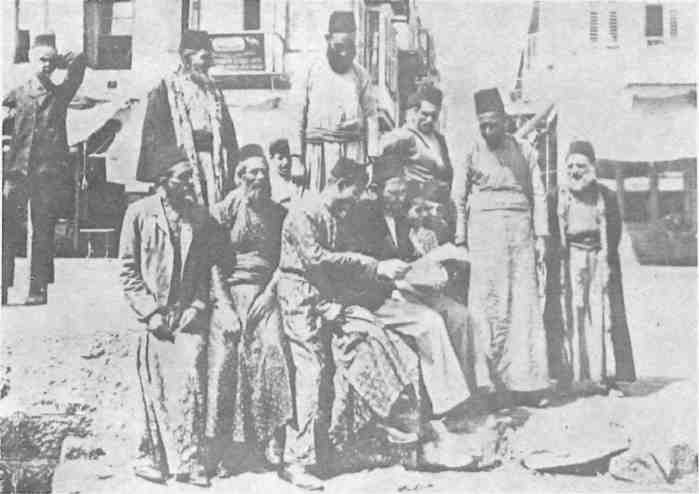
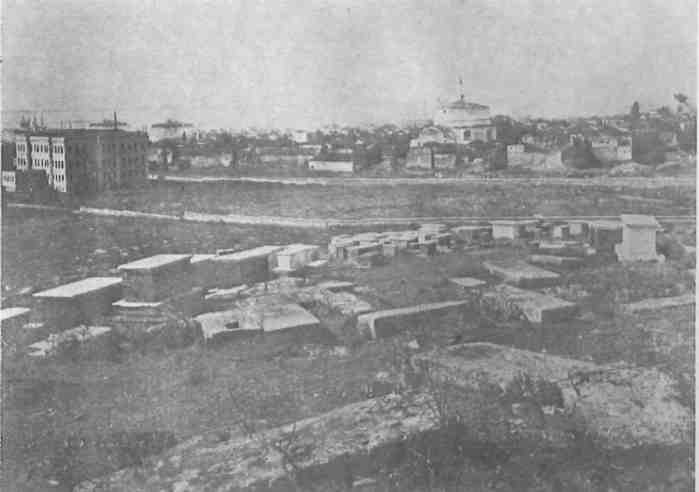
The majority of these Jews settled in Constantinople, Adrianople, and, in particular Salonica. Still other refugees came later from Portugal and Sicily so that within a very short period the new Jewish contingents absorbed the smaller, but older and Hellenized, Jewish community of Salonica. They proceeded to found separate synagogues or congregations named after their native cities, towns, or regions. Despite the fires and plagues which ravaged Salonica in 1543, 1545, 1553, 1604, 1610, 1618 and 1620, the number of Jewish inhabitants increased until, in 1650, it was estimated that the thirty-thousand Jews constituted one-half of the city’s total population.
The Jews quickly assumed important functions in the port’s economy. They established trading firms and expanded commercial ties with other areas of the Mediterranean. Jewish weavers and silk and wool dyers made Salonica famous for these crafts. The nearby gold and silver mines were worked by many Jews whose co-religionists in the city then manufactured jewelry.
In cultural terms Salonica became an intellectual centre of the Jewish world during the sixteenth and seventeenth centuries. The community maintained a medical school, rabbinical schools, libraries, and academies. Many pupils arrived from abroad to study at this hub of Torah learning. By 1515, printing presses were producing impressive volumes on theology, science, and philosophy.
During the latter part of the seventeenth century, Salonica also became a haven for a small renegade sect, the Doenmeh (Turkish for “apostate” or “convert”). Sabbatei Sevi, claiming to be the true messiah, arrived in the city in 1657, but after initial acceptance he was forced to leave by the town’s most prominent rabbis. Sabbatei Sevi subsequently converted to Islam and in 1683, thirteen years after his death, a group of supporters — some three-hundred Jewish families — also converted. By the beginning of the twentieth century approximately twenty thousand Doenmeh resided in Salonica, but neither the Jews nor the Moslem Turks accepted this hybrid sect.
The language spoken by the Sephardic Jews of Salonica has been referred to as Ladino, Judeo-Spanish, and Judezmo. Although words were borrowed from Hebrew, Turkish, and Greek, Ladino was a Hispanic language which became petrified on the threshold of important linguistic changes in the Iberian peninsula after the late fifteenth century. This dialect of medieval Spanish, transplanted to the Eastern Mediterranean, was printed in Hebrew characters until the twentieth century when use of the Latin alphabet increased in journalism.
The Ottoman Empire manifested signs of decline during the seventeenth century and the retrogressive process persisted with short interludes of revitalization until the Empire’s downfall during World War I. The dynamic cultural and economic aspects of Salonica’s Jewry also started to wane by the eighteenth century. Indeed, there is an apparent link between the vitality of the Turkish regime and that of the Jewish community of Salonica. Unable and frequently unwilling to keep pace with technological, financial, and military advances in Western Europe, Constantinople during the nineteenth century feebly sought to administer an economically backward Balkan peninsula infested with the separatist programs of the respective Christian nationalities. By the end of the nineteenth century Macedonia with its port of Salonica still remained under Turkish control but was surrounded by the newly created states of Bulgaria, Greece, and Serbia which aggressively attempted to incorporate this territory into their own. Concurrently, the European powers adroitly penetrated the economy of the Ottoman Empire, and French interests in particular contested the Jewish dominance of Salonica’s commerce.
The economic status of Salonica’s Sephardic Jews declined also in relation to other Jewish communities in Europe. Ashkenazic Jews of Europe, who easily outnumbered their Sephardic brethren and who emigrated in large groups to the United States, were critical of their co-religionists in the Eastern Mediterranean. Thus, the American Jewish Year Book ot 1913-1914 states: “The Balkan Jew is a man without needs. He lacks the energy and the intense ambitions which animate even the poorest of the Eastern [European] Jews. The striving to better his lot is not so powerful. For this reason, emigration is comparatively slight.”
The absence of an “intelligentsia,” or professional class, also characterized Salonica’s Jewry. In comparison to other Jewish communities of Europe, there were proportionally fewer attorneys, physicians, and men of the so-called liberal professions. On the other hand, unskilled labourers were numerous as the following figures on occupations compiled for the American Jewish Year Book (1913-1914) indicates:
In Salonica, 430 persons are engaged in the liberal professions, among them 300 teachers, 40 druggists, 30 attorneys, 20 physicians, 25 dentists, 10 journalists, 5 engineers. There are 1105 merchants (including bankers) carrying on business independently on a more or less considerable scale; 1200 owners of shops and stands; 2000 mechanics in various trades; 8000 employees in commercial establishments, commissionaries, etc.; 8000 male and female workers in tobacco factories and in the tobacco industry generally; 500 drivers of cabs and other vehicles; 600 porters (hamals); 400 employees on boats and docks; 150 employees in the customs service; 2000 employees in coffee houses, restaurants, and in the street trades.
American Jewish Year Book (1913-1914)
Jews, it might be added, provided the leadership and most of the members of the Socialist Federation of Salonica, formed in late 1908 and the region’s only important socialist organisation until after World War I.
Salonica’s Jews backed the Young Turks in their 1908 uprising, viewing this revolt as the prelude to the liberalization of conditions within the Ottoman Empire. The Empire demanded reform to maintain itself against enemies from without and from within, but true reform was not forthcoming. Disaster for Constantinople came with the defeat by Italy in 1911, on the heels of which the Balkan states declared war in the autumn of 1912.
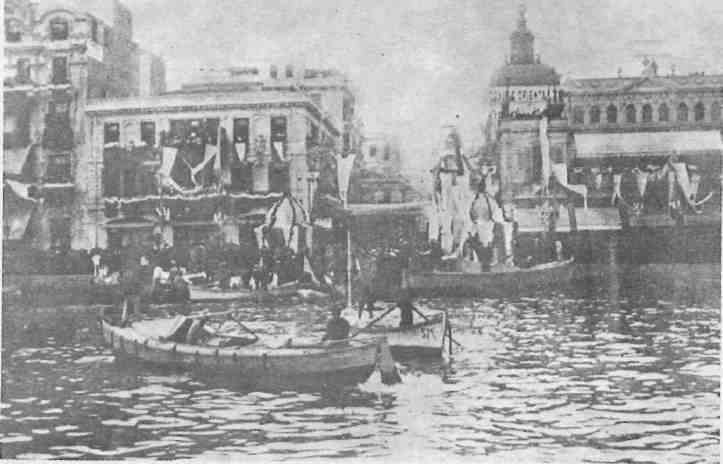
In the race to occupy Salonica, the Greek forces outdistanced the Bulgarian army by several hours on November 9, 1912. Upon the conclusion of hostilities, the strategic port became an integral part of Greece. The more than sixty-thousand Jews, who easily outnumbered the Greeks of the city in 1912, had no significant role in these events which affected them so directly.
To sum up four centuries of Turkish rule one can say that Constantinople treated the Jews fairly well. When the Ottoman Empire flourished, so did Salonica’s Jews; as the Empire declined, so did they. For a minority to prosper as a group in economically difficult times would have undoubtedly invoked the wrath of fellow-citizens and Turkish overlords; this situation did not occur. The Turks as a people did not overly concern themselves with commerce. leaving the Jews, Greeks and Armenians to compete against each other. Moreover, the Jews as a distinctly small minority in the Empire posed no real threat either to the Turkish administration or to the territorial integrity of the realm. Sultan Abdul Hamid expressed some concern over Zionist statements and increased Jewish immigration to Palestine, but these developments did not disturb Salonica’s community. Moreover, the Jews never assumed a scapegoat role which frequently afflicted their brethren in the central and eastern areas of Europe; in the Ottoman Empire this function was relegated to the more numerous Armenians. And although Salonica had lost its earlier prominence as a Jewish center, it still could claim the honour of being the stronghold of Sephardic Jewry.
Shortly after Greece’s takeover of southern Macedonia and Salonica, King George I declared that the Jews and all other minorities were to have the same rights as the Greek population. Despite the fact that Greece’s institutions in 1913 were far more liberal than those of the Ottoman Empire, Salonica’s Jews could not expect their earlier advantages to prevail. The city was now ruled by the Greeks, a centuries old commercial rival. The government in Athens also embarked on a program to Hellenize Salonica by making Greeks the majority group. In this manner the Jews who had dominated life in this municipality would find themselves residing in an increasingly alien environment.
World War I and internal Greek politics confused conditions once again for the Jews. And again, the Jews remained observers, not participants, in the main events. The Greek populace was divided politically in 1915 between the supporters of Eleftherios Venizelos, who favoured intervention in the war on the side of the Entente, and the backers of King Constantine I, who advocated continued neutrality. Salonica became a haven for the Venizelists and the disembarkation point for over one hundred and fifty thousand Allied troops after October 1915. The British and French forced Constantine to leave Greece in June 1917 and shortly thereafter the nation under Venizelos entered the war. During this eventful summer tragedy struck Salonica in the form of a great fire on August 18. After four rainless months and with a fierce northwest wind, the parched city had little chance of escaping destruction. Nearly half the town burned down, leaving eighty thousand homeless, fifty thousand of whom were Jewish. With the razing of thirty synagogues went the loss of historical treasures — medieval manuscripts, Torah scrolls, whole libraries and synagogue ornaments in gold and silver — transported centuries earlier from other regions of Europe. The Armistice did not terminate hostilities for Greece which became involved in war with Mustafa Kemals nationalist forces in Asia Minor. Defeat for Athens in 1922 and the Treaty of Lausanne in the Summer of 1923 resulted in an exchange of populations which sent over 400,000 Turks (and Doenmeh) to Turkey and brought 1,300,000 Greeks from their ancestral homes in Asia Minor and Eastern Thrace to a politically divided, demoralized, economically ravaged and crowded Greece. The largest percentage of refugees settled in northern Greece and over 100,000 in Salonica. Under these difficult circumstances the Jewish community suffered along with the new arrivals. The Jews themselves had fled to Salonica as refugees over four centuries earlier, albeit in smaller numbers, but conditions in the city were then more favourable to them. By the end of the 1920s the Jews constituted only twenty percent of the now Hellenized metropolis, a decrease of twenty percent since 1912. The Jews participated in the process of national recovery which, due to limited resources, could never be complete. Many Jews therefore sought relief through emigration to France, Italy, Egypt, Palestine and South America during the interwar years. Because of their involvement in commercial enterprises as employers or workers, the Jews felt very sharply the consequences of the world depression. Statistics gathered by the Jewish community revealed that in October 1933 about thirty-five thousand of their numbers crowded the relief rolls.
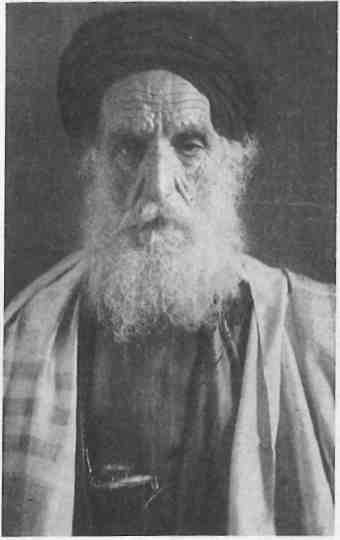
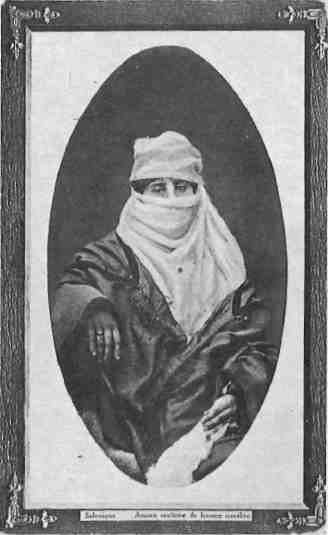
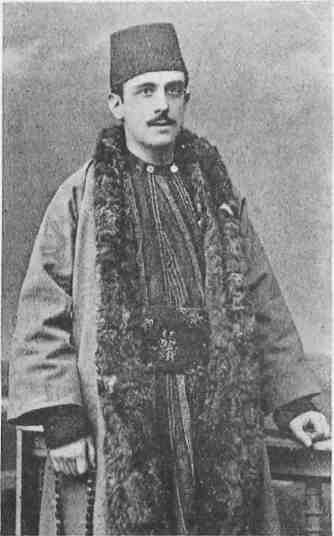
FROM THE ARCHIVES OF MOISE CONSTANTINIS
Anti-Semitic outbursts were few during this period, despite the efforts of the National Union of Greece (EEE), a small Greek fascist party, to organize demonstrations. Fascism in the strictest sense of a mass movement never made any headway in Greece and when compared to conditions in many regions of Europe during the 1930s, it must be said that the political status of Greek Jews was satisfactory. And although there were rich Jews, it could not be claimed as was attempted elsewhere that the Jews exploited the downtrodden economic condition of the Greek majority; too many Jews shared the same misery.
With his coup d’ etat of August 4, 1936 Ioannis Metaxas instituted a tight fisted dictatorship. Despite the fascist trappings of his regime, Metaxas periodically reassured the Jews that the Greek government would continue “to nourish the same feeling of sympathy for Jewish citizens which had previously existed” and which he himself had “personally always felt.” As subsequent events indicated, these were not statements designed to provide a false sense of security for the Jews; no public anti-Semitism was allowed. The Salonica Jews responded patriotically to the Italian invasion of Greece on October 28, 1940 by supplying over seven thousand men to forces fighting on the Albanian front.
By the time war came to Greece in the autumn of 1940 the number of Jews in Salonica had dipped to about fifty thousand, most of whom still conversed in Ladino. The approximately nineteen thousand other Jews who resided in Greece, particularly those outside Macedonia and Thrace, were largely Hellenized in the sense that they embraced the Greek language and culture. Although Ashkenazic Jews constituted the overwhelming percentage of the world Jewish community, the small Sephardic minority could still look to Salonica as its center. Consequently, the German occupation of Greece was doubly devastating: with the deaths of over ninety percent of Salonica Jews, a crushing blow was also dealt to the centuries-old Judeo-Spanish culture in the tolerant setting of the northern Aegean. By the end of the period of postwar emigration, barely one percent of Salonica’s population of two hundred and fifty thousand was Jewish.
The Sephardic Jews of Salonica embodied a traditional culture, slow to change, which survived among the traditional societies of the Turks and Greeks. Had these Jews been otherwise, perhaps more Europeanized, more enterprising and professionally inclined, more aggressive in their methods, they would have conceivably stimulated policies of persecution and discrimination against themselves. Not withstanding their cultural differences, they still blended into their surroundings. It was thus tragically ironic that the German invader, alien to this corner of Europe, destroyed this unique community with its rich past. With good reason pessimistic observers fear that Ladino and Judeo-Spanish culture will survive into the next century only with the greatest difficulty.
“The Sephardic Jews of Salonica” originally appeared in Midstream: A Monthly Jewish Review, New York.