Writer Dido Sotiriou has lived through extraordinary times in her 83 years. She was expelled from her homeland on the coast of Asia Minor while only a teenager, events woven into her novel Farewell Anatolia. She then witnessed Greece involved in a World War, followed by German Occupation and a Civil War. It would not be surprising if she were somber, even bitter but instead she is a delightful free spirit, her indomitable zest for life revealed in her alert eyes and sudden bursts of rippling laughter. “I’ve done a lot of things in my life,” she explains, “and I’m happy with what I did.”
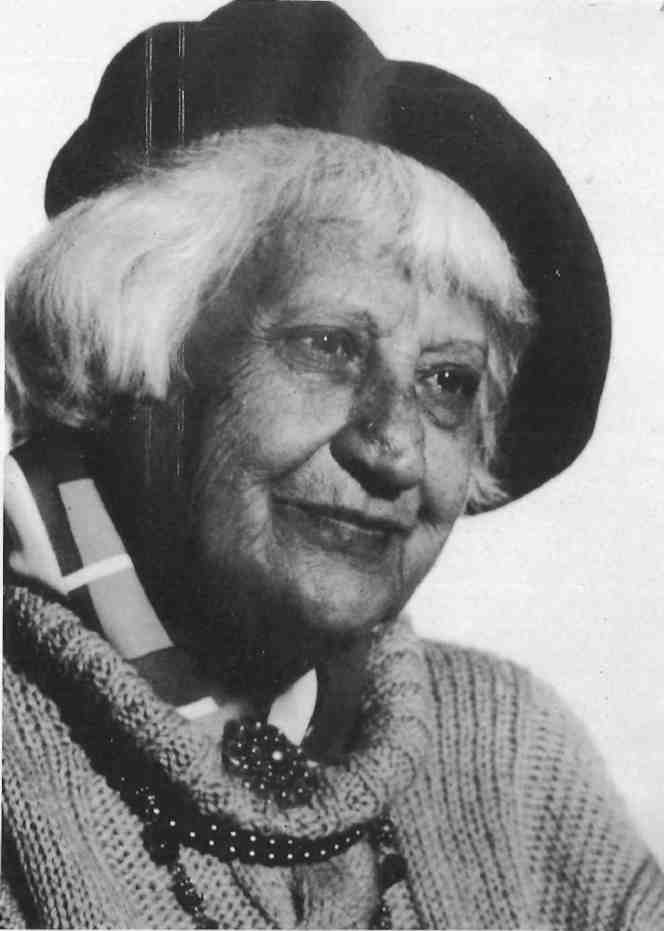
She offered me an ouzo but explained she could not join me because she has had a number of strokes. This hasn’t kept her from continuing an active life; just yesterday a camera crew from Turkish Television had interviewed her in her home. Earlier today she had met with a representative from Antenna private television station, with whom she has an option to make a series about Farewell Anatolia. A few days earlier Osman Kavala, a Turkish entrepreneur, visited her to discuss plans to make a feature film about the same novel, co-produced by Turks and Greeks with other European funding. She described all this activity as “very interesting to me” and it was evident she was both gratified and stimulated by the recent attention focused on her writing and on Farewell Anatolia in particular.
A lot of the interest was sparked locally in 1990 when she was awarded the highest honor for a Greek writer, the prize of the Academy of Athens for her whole body of work. Her international reputation was enhanced by the English language edition of Farewell Anatolia, published by Kedros in 1991.
It was ten years ago that I first heard about Dido Sotiriou’s novel Farewell Anatolia, a moving account of the adventures of Manolis Axiotis, a Greek living in Asia Minor in the years leading up to the ‘Great Catastrophe’, the burning of Smyrna and eventual expulsion of over a million Greeks in the years following 1922. A Greek friend gave it an enthusiastic endorsement but I put off reading it because it was available only in Greek. I finally read it in its English version by Kedros. I too became a fan of hers and could readily imagine the tale being adapted for the screen. It is stamped with the particular events and atmosphere of its period but the underlying motivations and colorful characters incorporate universal qualities.
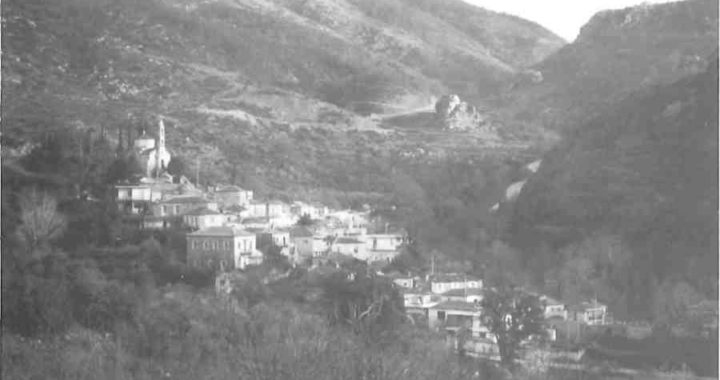
Sotiriou showed me photographs of her family. As she describes it, although her family was poor, her early days in the small village of Chirenje (Kirkica in the novel) in Aydin were very happy. She was from an area largely populated by Greeks and her father had an olive oil soap factory, an industry dominated by Rum, the Turkish word for Greeks derived from the Eastern Roman Empire.
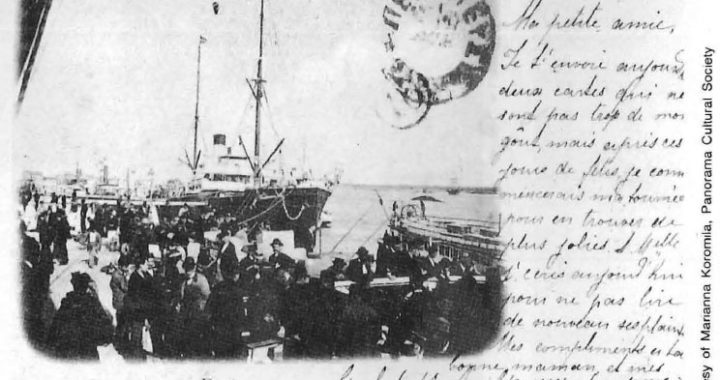
Sotiriou and her sister sailed to Greece when the massacre began in 1922. “When we arrived in Piraeus as refugees, of course we experienced great difficulties. We lived on the streets and my sister and I slept on the beach with trie other children.” Sotiriou recounted that eventually, her aunt’s family recovered and opened a leather factory. “At this time, I was told many things not to do, mainly not to study but to find a rich husband.” She got a mischievous look and said wryly. “But I made my own little revolution. I went to a French school here and then studied literature at the Sorbonne. In France I found a spirit that was missing here. I became acquainted with writers such as Gide and Malraux. I qualified as a French teacher but I began to work as a journalist. I became the editor of the Yineka magazine in 1934 when I was 25.”
When Sotiriou did marry, it was not to a wealthy man, as her aunt had advised, but to the great love of her life, Platon Sotiriou, whom she describes as “a kind mathematician”. They decided not to have children but lived happily together until his death at the age of 86 in 1985. She showed me his photograph and one of her taken by the well-known photographer Nellis who came from the same region in Aydin. A famous Picasso sketch represents The Man with the Carnation, Nikos Beloyannis, the famous Resistance figure who was married to her sister. Her sister and he were imprisoned and he was eventually executed. Sotiriou also became involved in the anti-Fascist struggle and escaped from the Germans while reporting on the Resistance from Hymettus.
Sotiriou’s inquiring mind has led her to write a number of educational books and .a study which presented evidence that the Great Catastrophe was not the fault of the Turks or the Greeks but of foreign interests. “They were quarrelling over the oil. I went to archives and found the secret writing of Mustapha Kemal (Ataturk) and this confirmed this idea as did the journals of Venizelos, the Greek prime minster at the time.”
“In my study I have included two things I firmly believe in. One is the words of someone in a camp of Hitler who said, Whoever forgets the past, is doomed to live it again, The second message is from Pericles who said J am more afraid of our own mistakes than the schemes of our enemies.”
Although Sotiriou acknowledges that political events have great importance to her, she stresses, “My main goal was to write about the people involved. I wanted to create lively works, not artificial ones.” She certainly has achieved this in Farewell Anatolia.
Actors should be vying to have a chance to portray some of the main characters in the novel. Among them are Ali Bey, a carousing landowner who pined away for the love of Artemitsa, a stunning young Greek. Manolis’ mother was a “gentle, homely woman. Her husband may have been hard and remote but she obeyed him blindly, with a kind word and smile. Don ‘f go against a hot-tempered man and hell be your slave, she used to say.”
Stratis Xenos was an intrepid soul “who could bend an iron rod with his bare hands and his heart knew no fear.” When his wedding feast was interrupted by the slaughter of three of his family, he became the leader of the opposition to the Turks, risking his life to pay midnight visits to his wife. The smuggler Louloudias ran an inn and after a particularly good job would celebrate. “He would invite the most unlikely people and hire the town’s top entertainers: Katina, the darling of Smyrna’s innumerable Cafe Aman, the famous Turkish violinist Mehmetaki, and Yovanaki, the magician of the santur. The festivities would last for days on end. Ogdondakis, the singer, was a tall slender man with smooth, almost feminine skin, warm black eyes and a voice that could calm a raging boast. When arrested on espionage charges and condemned to death, he saved lis life by singing so beautifully that a pasha spared him and he escaped to the island of Samos. But the song that had stolen Suleiman Pasha’s heart was soon on all Smyrna’s lips.”
Sotiriou visited Turkey in 1989. I love the people and their intellect; they want peace. We have no reason not to love each other; we’re neighbors.” Sotiriou prides herself on being fair in her writing including descriptions of good Turks and bad Greeks. She was delighted while on a visit to her village of Chirenje to come upon the Sotiriou Cafe, named in her honor.
In closing our conversation, Sotiriou remarked, I like it here in Ano Ilisia because it is a real neighborhood. I need to be out among the real people, being hugged and drawn into conversation. Last week when I went to the market, the lady who sells apples and calls me ‘the woman with the beret’ was asked by her partner where she had seen me recently. She answered in a stage whisper, “On television.” A man nearby said, “What television? Don’t you have her book so that you can read it? If you do, you’ll cry, yes you’ll cry. But the tears you shed will be cleansing and afterwards you’ll become a person.” Sotiriou commented, “Isn’t that beautiful? My books may contain tragic scenes but they are not oppressive. I hope they make the reader feel like a real human being.”