Greece and Ireland are on the periphery of Europe, separated by the full diameter of the continent’s centre. ‘Both are small in size, yet have been successful in keeping their identities through the centuries. Which means they are both tough,’ said the Irish ambassador to Athens, Sean G. Ronan. ‘Greece is well-known in Ireland, since there is a long tradition of classical education. Tourism has also helped. Many Irishmen have spent summer vacations in Greece’. Apart from a few restaurant owners in Dublin, few Greeks travel to Ireland, however, which is still a blank spot in the minds of most Greeks.
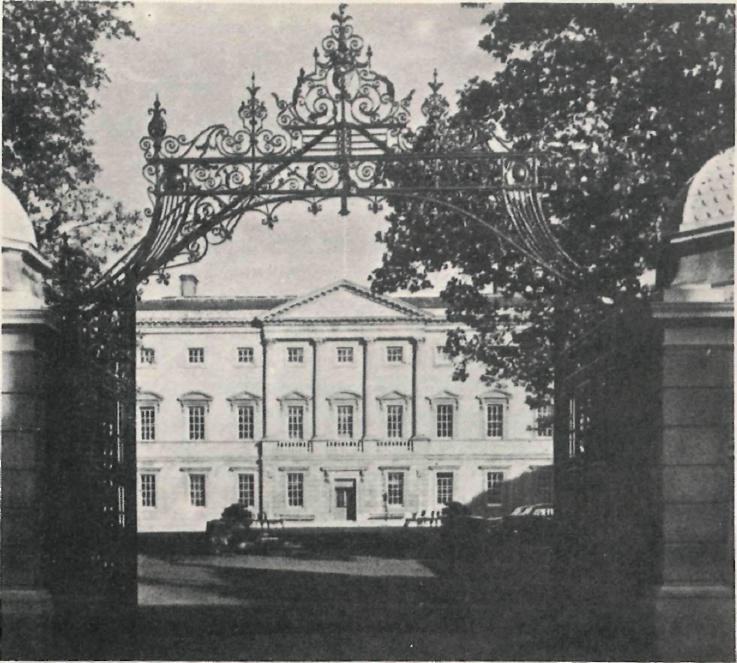
Ireland and Greece, when the latter is admitted, will be the two ‘least affluent’ countries in the Community, an expression the ambassador preferred over the word ‘poorest’, underlining the fact that neither is really all that poor. Ireland, with a per capita gross domestic product of $2.180 and Greece with $2.139, according to OECD figures, are among the top twenty-five countries of the world.
Establishing a new embassy means a great deal of legwork, from locating an office and residence, to. hiring a secretarial staff and building up an information archive, a challenge Ambassador Ronan has confronted for the first time in his almost three-decade-long career in the Irish Foreign Service. Mr. Ronan’s periods of service abroad have included postings to the United States as Consul General in Chicago, to the European Council in Strasbourg, as the Deputy to the Foreign Minister, to Germany as Ambassador, interspersed with stints at headquarters in Dublin. From 1973 to 1977, Ambassador Ronan was on leave of absence from the Irish Foreign Service. He spent those years—four years to the day, he notes—in Brussels where he was Director General for Information at the European Economic Commission. In that capacity he visited Athens for the first time two years ago when the Commission opened its office here in view of the ongoing negotiations for Greece’s admission to the EEC.
The appointment to Athens of a man with both a European-diplomatic and European-Community background seems particularly opportune. Trade, so far on a rather limited scale between the two countries but showing an increase of twenty-five percent last year, will obviously play an important role in relations between . the two countries. ‘Besides, embassies sometimes generate their own business.’ he added.
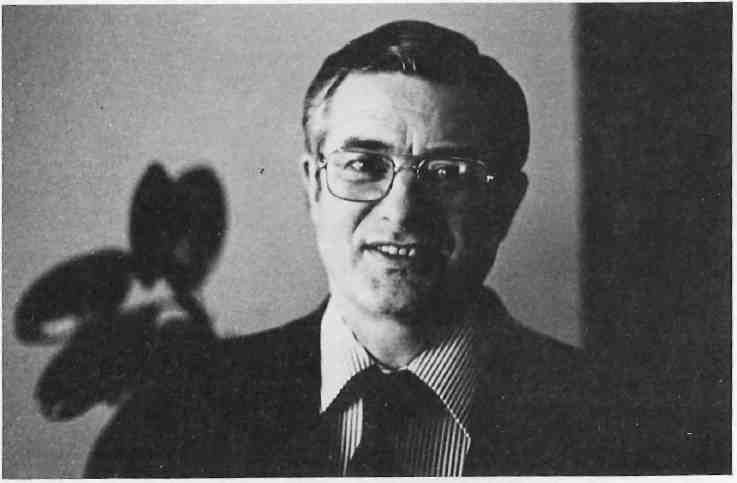
As dissimilar as the blue-eyed Irish may seem from the Mediterranean Greeks, there are many points in common to be found in the development of the two countries, in their present problems, and in their search for solutions. Like Greece, Ireland has been primarily an agricultural country in search of industrialization. Approximately twenty-four percent of Ireland’s labour force is in agriculture and fishing, compared to thirty-six percent in Greece. ‘The industrial revolution bypassed us,’ Mr. Ronan remarked dryly, adding with a smile, ‘We have had lots of other revolutions, though.’
Like the Greeks, the Irish have traditionally sought a way out of their lack of opportunities at home by emigrating. While Greeks can be found all over the globe, the Irish have concentrated heavily in the industrial cities of England and, primarily, the United States. The largest exodus was between 1845 and 1848 during the Great Famine when the country’s social and economic structure collapsed. Close to one quarter of the entire population—over two million people—either left the country or died of starvation.
In October 1961, Sean F. Lemass, then prime minister and Eamon de Valera’s successor as leader of the governing Fianna Fail party, dissolved the sixteenth Dail, the one hundred and forty-four seat Chamber of Deputies, in order to win a new mandate to negotiate Ireland’s entry into the European Economic Community. Lemass lost the absolute majority, but was reelected Prime Minister. Ireland’s application was suspended following Britain’s failure to join, but negotiations continued.
When Ireland finally joined the Community in 1973, at the same time as Britain and Denmark, a referendum was held, and the outcome was five to one in favour. The Market has been very good for us,’ Ambassador Ronan says, assessing the situation. ‘First there was a much-needed infusion of money through the Agricultural Fund.’ Although land holdings in Ireland average forty acres—substantially higher than in Greece—agriculture was in great need of modernization. Until the turn of the century, a large part of the land had been held by absentee landlords, most of whom resided in England and did little to improve the land. ‘There have been no regrets about our joining the EEC,’ he added.
Glancing at the real-estate sections of German newspapers today, for example, one finds between offerings as far-flung as South America and Scandinavia, an astonishing number of ‘opportunities’ to buy farms in Ireland. I wonder if the influx of wealthy foreigners might have had an adverse effect in the prices of land, much as real estate values have been driven up in Greece since foreigners began buying up choice spots, particularly on the islands. ‘We have a very strict licence agreement regarding land purchase. Foreigners are limited to not more than five acres,’ Ambassador Ronan explains. He adds, however, that it is not known if, once achieved, the right of establishment of all members of the EEC—that is, the right to settle wherever they choose within the Community—will influence these licensing agreements.
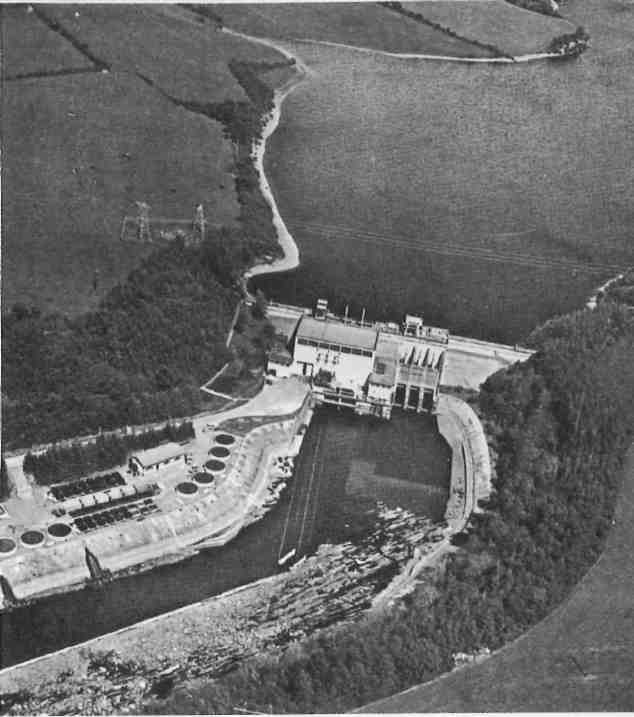
The discussion moves from land investment to foreign investment overall, and here we touch on an ar£a where Ireland has met with impressive success. As in Greece, a substantial part of the population is concentrated in the capital. Of a total population of three million, six hundred and fifty thousand live in Dublin. The traditional and long-famous industries such as weaving, crystal-cutting, and lace making, however, have always been dispersed over the entire country.
Under the aegis of the Industrial Development Board, a now-autonomous state body, with offices in the U.S. and Europe, Ireland reversed, in the 1960s, its earlier policy of chauvinism and protectionism. This was in the belief that the only way to significantly increase industrial volume and create much-needed employment opportunities that would stem migration lay in attracting the right kind of industries from abroad. There was land available, and a large, untapped labour force. The emphasis has been placed on attracting foreign exporting industries, and substantial and liberal incentives are offered. These include capital grants, training grants (up to fifty percent of which Ireland may recoup through the EEC Social Fund), a ‘tax holiday’ until 1990, guarantees of loans and subsidies, provision of ready-to-occupy factories, and industrial housing. Incentives are higher for those industries settling in particularly needy areas of the country. Those providing the maximum training in skilled labour are preferred. Ireland’s membership in the EEC has made this offer particularly attractive to non-EEC countries.
As a result of these liberal incentives a large number of overseas companies have established factories in Ireland, totaling 662 new industrial projects at the end of 1976 with a capital investment of approximately $950 million. Of these, thirty-two percent were British, thirty percent American, nineteen percent German, and four percent Dutch. Finnish, Japanese, Swedish, Swiss, Belgian, Canadian, Italian, Australian and South African companies account for a smaller share.
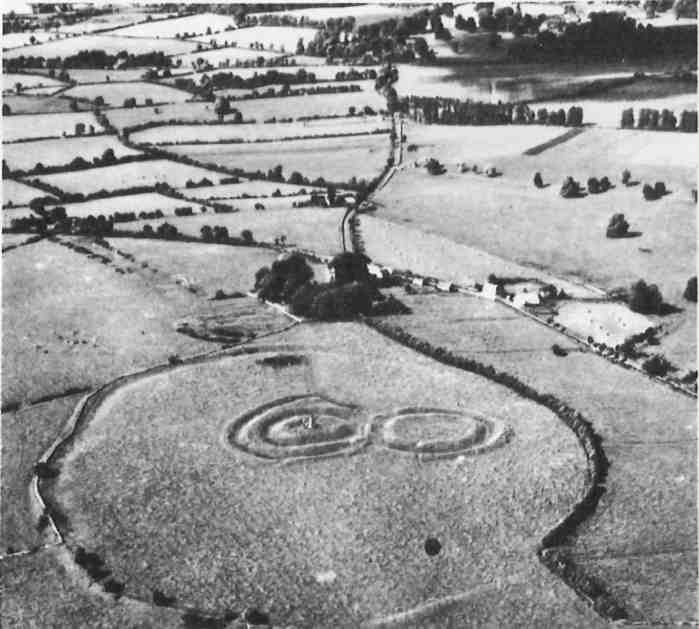
Despite these efforts, however, Ireland has been deeply affected by the world-wide economic slump in the seventies, and the growth rate of investment slackened considerably in 1974 and 1975. Inflation rose above ten percent. Many attribute the defeat of Liam Cosgrave to these economic woes. Prime Minister from February, 1973, Cosgrave had led a coalition of his United Ireland Party, Fine Gael, and the Labour Party until the elections in June, 1977. Fianna Fail, under John Lynch, who succeeded Sean F. Lemass in 1966, won a surprise victory with eighty-four seats, the largest majority ever achieved by an Irish party.
assembly.
Lynch’s first act after taking over the government in July was to establish a new ministry, the Department for Economic Development, headed by Martin O’ Donoghue. Among its purposes is to stem the inflation rate, officially said to be twelve percent. But an EEC study published in January 1977, called the country an ‘economic disaster area’, and estimated the inflation rate closer to eighteen percent.
Would Greece’s admission to the EEC negatively affect the other ‘less affluent’ country of the association? The ambassador emphatically says no. ‘Politically we support Greece’s entry into the EEC wholeheartedly,’ he states. ‘We feel that it is most important to strengthen democracy.’ He quotes a statement made by Prime Minister Lynch in a London interview with a correspondent from Greece’s National Radio and Television Network in September of last year. ‘Economically we have no objections either. Our products do not compete, generally, provided that the Community itself will not be weakened by the entry.’
Ireland receives six percent of the so-called Regional Fund of the European Commission, a fund that was established to promote development in poorer regions of a country. Ireland has considered its share as too low in comparison to what the other member-states are receiving. France receives fifteen percent, Italy forty percent, Germany slightly more than six percent and Britain twenty-four percent.
‘The Regional Fund has been unsatisfactory since it started to operate in 1975,’ explains Ambassador Ronan. There are now negotiations going on regarding its increase in volume, so that the slices will not become smaller with each new country admitted. This is important for the strength of the Community itself, he notes, especially in view of the expected membership of other countries, such as Spain (which is more of an industrial competitor to Ireland than Greece) and eventually Portugal, which will need a great deal of help to bring it up to Community standards.
Although some of its trained graduates have been absorbed by the influx of industry, Ireland is still suffering from ‘overeducation ‘ and a resulting severe unemployment. This is particularly true in the field of teaching. The government has now launched a new program aimed at increasing job opportunities, particularly in the fields of education a nd security (army and police). Ireland has two state universities, the National University of Ireland and Dublin University. A rather curious feature is that one old private university, the Royal College of Surgeons, cate rs nearly exclusively for students from developing countries.
Politically, Ireland has had, in all its history as a modern state, a thorn in its side. Northern Ireland has been in the news for a decade now because of fierce fighting between the Catholic minority of one-half million, and the Protestant majority of one million . Although the surprise victory of Lynch’s Fianna Fail in June last year presaged for Britain a harder line in the negotiations (the Fianna Fail was founded on the principle of complete withdrawal of the British from the six counties in Ulster), there has been no substantial change in the Government’s attitude. Ambassador Ronan stressed that it is considered a political and not a religious conflict, that the relations between Ireland and Britain are harmonio us, and that the idea of a power-sharing government of the two communities is essential to any solution. For the time being, the presence of British troops is accepted as necessary.
Ireland was one of the first nations to contribute a contingent to the United Nations Cyprus Peacekeeping Forces. The troops we re withdrawn about a year ago, when problems in Ulster intensified. Several weeks ago, a group of Irish parliamentarians attending a conference in Nicosia expressed their sympathy for the problems the island is facing. Their spokesman said that Ire land was particularly sensitive to the Cyprus situation because of the ir own bitter experience with partitio n, which he called a ‘ non-solutio n leading to nowhere wherever, it occurs’.
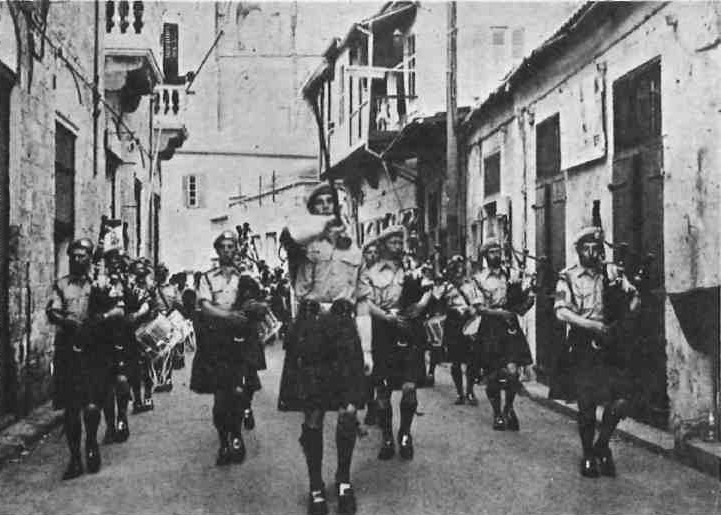
The Irish troops were withdrawn about a year ago.
From trade to politics, to social legislation (Ireland has a ra ther special ‘deserted wives’ bene fit program and a generally liberal health service patterned after continental European standards), the conversation drifts to a unique Irish phenomenon: the tiny nation’s impressive contribution to the arts a nd particularly to literature. On a smaller scale, something similar has occurred in modern Greece. Asked what he feels might account for this unusual burst of creativity in a small country, Ambassador Ronan said that such things cannot be explained in logical terms- a strong national awakening, the remembrance of a cherished heritage, perhaps a lack of mate rial opportunities. Just as many of Greece’s best-known artists live abroad, Irish writers and painters have often left: James Joyce and Samuel Beckett went to Paris, Francis Bacon to Berlin and Paris, and Oscar Wilde and George Bernard Shaw lived mostly in England. Yet they all drew heavily from the experiences of their youth in Ireland.
Although some of those experiences were rather negative ones as in the case of Bacon, they provided a vast font of ideas and thoughts. Some of Ireland’!; contemporary, young artists have set;ied in Greece, a nio ng them ‘ the three Os’: the poet Desmond O’ Grady lives on Paros, Patrick O’ Brian, a classical guitarist, and Peter O ‘Leary, the tenor live in Athens.
Ireland has also impressed non-Irish writers such as Heinrich Boell whose Irisches Tagebuch is considered by many to be o ne of the finest ever written by the Nobel prize winner. Ambassador Ronan admitted laughingly that ‘this has been the best public relations job anybody has done for Ireland’.
Much of the widespread fame of Ireland’s products is attributable to pre-jet travel, when a stopover at Shannon was de rigeur and much welcome for its tax -free shops. Since his arrival in Athens, the ambassador has been busy with a great variety of tasks (the offices, temporarily located in a suite at the Hilton Hotel, will eventually have a staff of ten when they move into their own quarters near the Olympic stadium, but trade is a major preoccupation. Indeed, Greece’s EEC association was a paramount consideration in the decision to establish resident embassies in the two countries, and trade and the EEC are subjects foremost in the minds of Greeks as well as the Irish.
As we conclude the interview, Ambassador Ro nan explains that the word ‘whiskey’, as it is spelled in Ireland to distinguish it from its Scottish cousin, ‘whisky’, is of Celtic origin : uisce beatha means ‘water of life’ in Gaelic, the aquavit of the Scandinavians. On the subject of future trade development between his country and the land of his new assignment, he adds, grinning: ‘We would love to drown Greece in Irish whiskey.’ With that we took our last sip of local beer.