Conservation is a concept with which it is impossible to disagree, if easy to neglect. Clean air, clean water, abundant wildlife? Certainly! Who, afterall, would war against flowers in the age of love! That concrete results, however, require sacrifice and diligent action is a less appealing truth.
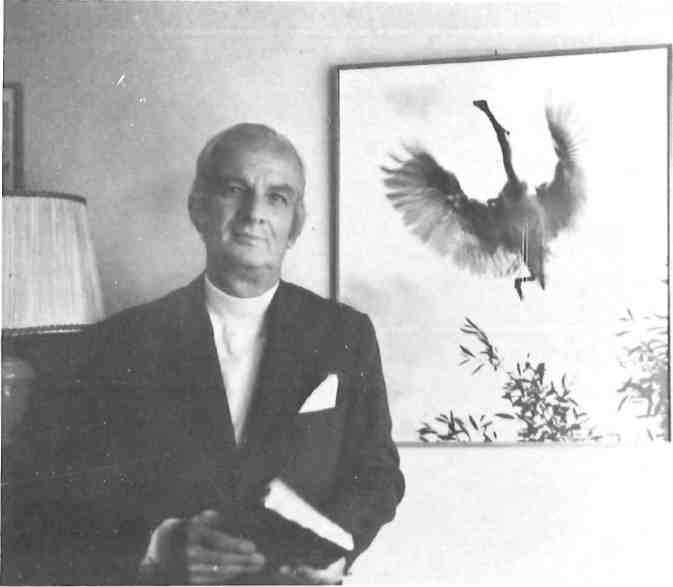
No one, not even dedicated conservationists such as Mr. Antipas, want to have Greece remain a remote Theokritan backdrop for romantic tourists. Greece, however, in eliminating backwardness is in danger of eliminating its beauty with it. ‘Natural beauty’, says Mr. Antipas, ‘is harder to develop than industry: it is an irreplaceable resource.’
Greece still maintains a reputation for incredible natural beauty. Its diversity is less known. While most travellers content themselves with routine excursions to the famous and well-trodden places, returning home with raves (quite justly) for ‘ancient Aegean light’ and sunsets at Sounion, few have explored the lesser known richnesses of landscape which make Greece so fertile for the naturalist, the conservationist and the mountain-climber. There are the great forests of Macedonia and Epiros, with their wolves and foxes and boar; the snow capped mountains, with their miniature late-blooming flowers and mythologically enriched panoramas; the wet lands alive with multitudes of rare birds; the offshore crags and searocks with their monk-seals and cormorants and falcons. No other European country can surpass this diversity, this legacy of sheer magnificence.
My interest in Greek conservation has been almost wholly stimulated by my friend, Byron Antipas, who has with justice been termed, by American consevationist David Brower among other, ‘Greece’s one man conservation movement.’
Excited by observations made on an extended hiking trip in the beautiful and lonely mountains of the Peioponnisos, I returned to his office recently, a cluttered room lined with beautiful bird photographs, reports, studies, maps, magazines, and books in a half-dozen languages. A man of great charm and warmth, Mr. Antipas seems always pleased to welcome anyone with even a modicum of interest in his abiding passion: conservation.
Born in Constantinople in 1910, Byron Antipas came to Greece at the age of fifteen and graduated from the University of Athens in the field of economics. After thirty-seven years with the Bank of Greece, Antipas resigned his post as inspector general in the furtherment of these passionate aims, whose need loomed so evidently and so threateningly. ‘There is so much to protect, so much work!’ exclaims Mr. Antipas. ‘Experience has shown us that governments cannot be left to draft appropriate measures unprodded. I felt that here I could be of some service to my country, to mankind.’
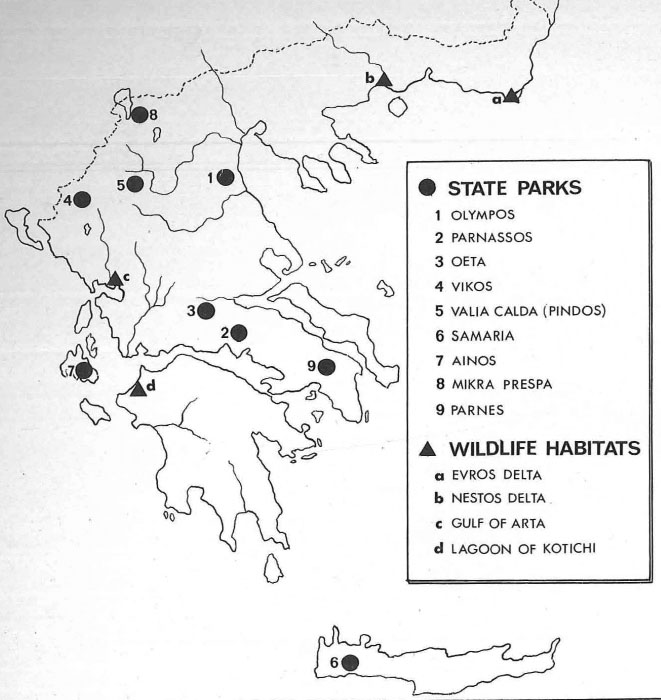
Although it has been his hobby for twenty-five years, Mr. Antipas’s first extended campaign in conservation after his retirement from economics resulted in 1974 in the creation of the Mikra Prespa National Park, near Fiorina on the Albanian border. ‘Prespa is an amazing place’, says Mr. Antipas, his face growing animated when this most beloved of projects is broached, ‘one of the most enchanting in all Greece. There are two lakes, with a narrow causeway between them, very important for the birds. To row out on Lake Mikra Prespa with one of the local fishermen is a wonderful experience. Since ancient times, Greece has been rich in wet lands where a great number of bird species have found their optimal breeding range. Hundreds of thousands of geese, swans, and ducks from northwestern Europe are concentrated there during the migration period. The Mikra Prespa lake is a real paradise for anyone who is at all interested in observing these wonderful birds in their natural habitat. There is not its like in all of Europe.
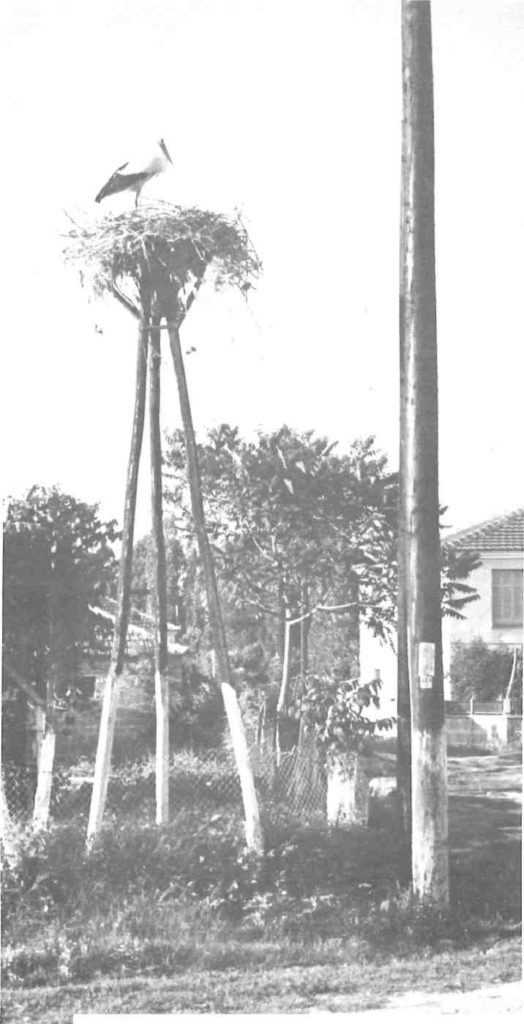
‘Ornithologists,’ he continues, ‘are conducting extensive studies on the 180 different species living there.’ Mr. Antipas, himself a dedicated ornithologist, has conducted a census of storks on the lake, large silent birds which fly in a beautiful V-formation. ‘But the most unusual aspect of the lake is its pelicans. Both European species, the White Pelican and the Dalmatian Pelican — they are quite similar — are breeding there, about 300 pairs of them, together with Yannina, Pindos, Parnes, Crete, and Kefallonia. ‘But this is only a beginning — there is so much of value to protect before it is lost to us. Did you know that Greece has 6000 species of wildflowers, of which 600 are endemic? That is more than many western European countries combined! But in the last century many species have utterly vanished. Fortunately, we have much wilderness of astounding beauty left, and we must conserve as much of it as we can.’
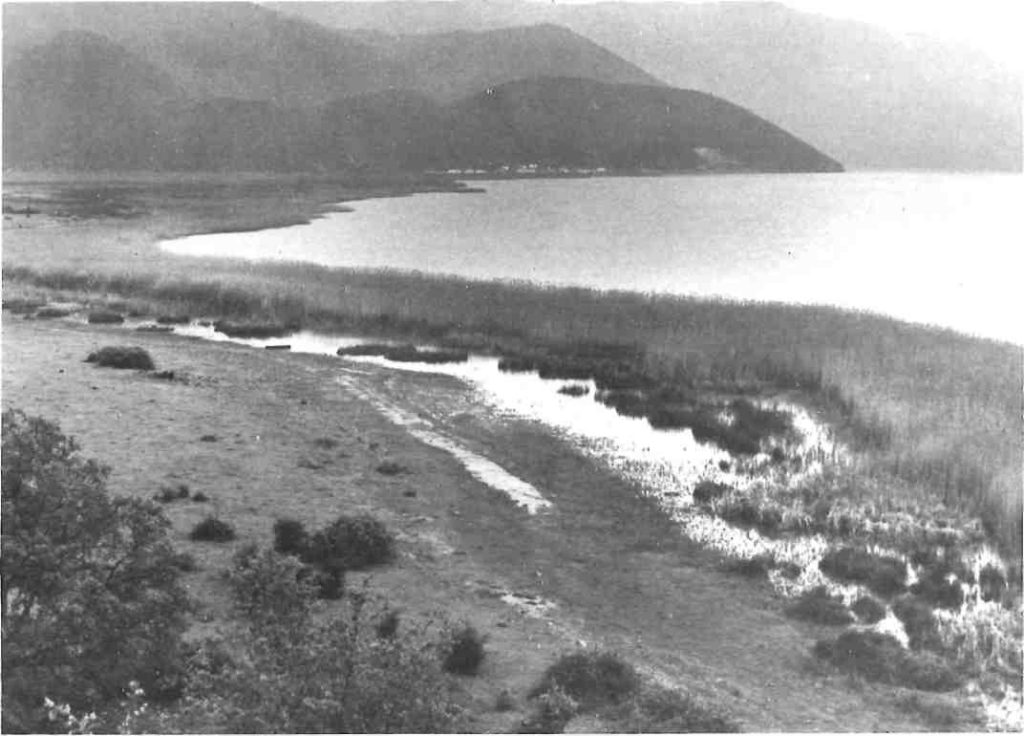
A view within the National Park at Mikra Prespa.
Nine national parks may seem impressive in a country as small as Greece, where no spot however remote is more than eighty miles from the sea, as any mountain climber can easily verify; but more are urgently needed. ‘Take the Evros wetlands near Turkey. This is, after Prespa, perhaps the richest area for bird life in Greece; it must be made into a park. Although we don’t use miles of nets, like the Italians, to capture our birds, Evros is a very popular place with hunters, who contribute seriously to the decline of the many ducks, coots, geese, egrets, and swans which flock there every year. We have gotten help from the Minister of Eastern Macedonia and Thrace, who has abolished the Evros Hunting Festival, designated no-shooting zones, shortened the open season and established a limited bag rule. These decisions have created a fully protected area around the Evros delta. This is the first indispensable step for the future establishment of the Evros National Park. The proposal is now being studied. We’ve got to eliminate hunting there altogether.’
It is not enough to make a park on paper; animals, birds, flowers, and often enough people, will not read it. Consequently, ensuring protection for these areas is a prime concern of Mr. Atipas. He feels we desperately need more protection in the existing parks. ‘What we have now is manifestly insufficient. We need more personnel with greater experience to enforce the regulations. I’m asking for government support for laws already on the books. We nave, for example, anti-pollution laws, but they remain largely unenforced. Fortunately, danger from tourists is not the problem in these remote areas that it is in America — tourists naturally tend to favour the coastal areas. Unfortunately, this raises difficulties for the 15,000 kilometres of Greek coastline, with its infinite variety and sparkling clarity. Regrettably little has so far been done towards solving this problem, and it might even be already too late to save the coasts and islands from the impact of mass tourism and industrial development.
‘One good thing I can mention, however, is the success of the fight to prevent a cement factory from opening on the beautiful Methana Peninsula. If you have driven from Athens to Corinth you know what has happened to that once lovely stretch of coastline — it has been utterly ruined by industrial development; and the water of the upper Saronic Gulf is quite polluted. But below Corinth the coast remains unspoiled and remarkably beautiful. Except for a few areas, even the tourists have not invaded it. One cement factory would have rapidly snowballed into a dozen. Now the Minister of Ijblic Works has temporarily suspended coastal development.
‘This may seem a small victory, but the conservation situation around the world is so grave — it is easy to become a pessimist — that even a small victory must be heartening.’ Although Mr. Antipas may sadly profess to be a pessimist when he considers the enormity of the problem, the indifference, and the resistance to be overcome, his dedication, enthusiasm, and sheer energy effectively belie this. Such dedication assumes the possibility of success.
There are various organizations working in Greece to promote the common aims of conservationists. For example, Mr. Antipas, who keeps in touch with all of them, is Secretary of the Greek National Section of the International Council for Bird Preservation; Honorary Secretary of the Hellenic Society for the Protection of Nature; and member both of the International Union for Conservation of Nature and National Resources, and the World Wildlife Fund’s Working Group on Greek Conservation. The international character and mutual cooperation of these groups indicates a growing world consciousness of the problems and the need to work in concert; factionalism is sedulously avoided.
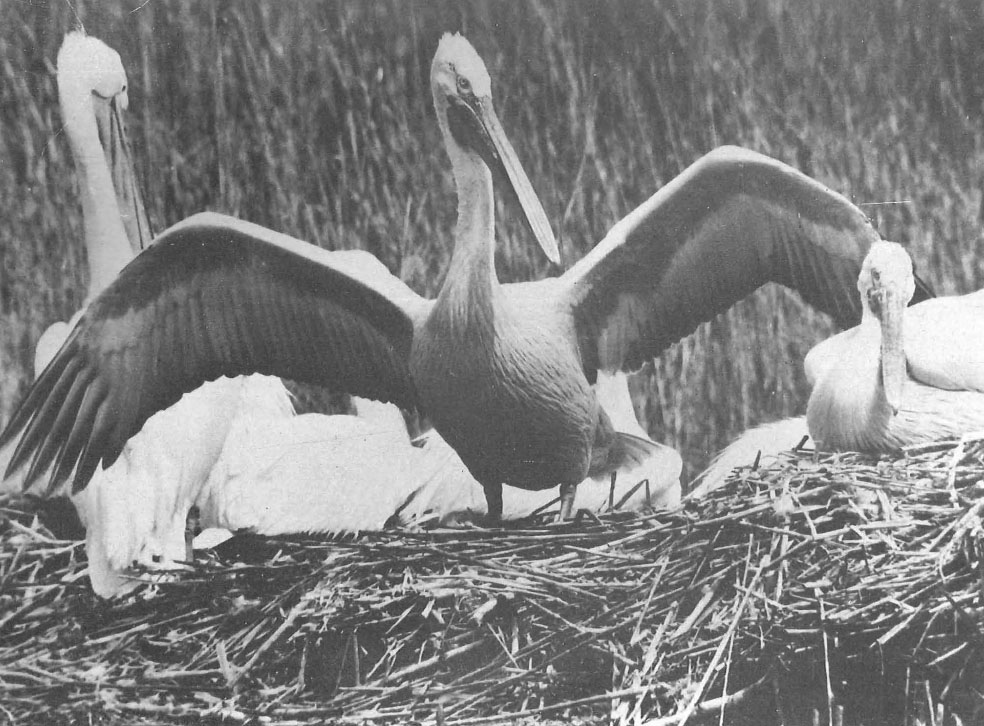
Of the 180 species living on Lake Mikra Prespa, the most unusual are the White Pelican and Dalmation Pelican which both breed there.
Shown in the photograph is a White Pelican.
‘All the Greek conservation groups have been cooperating,’ explains Mr. Antipas. ‘The Hellenic Society for the Protection of Nature, the Hellenic Alpine Club with its fifty years of active life, the Athens Society of the Friends of Trees — you know how denuded of trees southern Greece is, owing to man and his goats — The National Landscape and Town Commission, and others. The common aim of us all is to coordinate and channel activities and means towards the protection of nature. Probe any crusader for a just cause and you will unearth an educator: true to form, Mr. Antipas views education as the key to the future. ‘How are our children to know and appreciate the necessity for protecting nature unless they are told?’ Mr. Antipas asks, rhetorically. Ί believe it is of the utmost importance that we develop a sound programme of environmental education for both students and their parents. Shockingly little educational material is available, and teachers knowledgeable in environmental problems are few and far between. The Hellenic Society for the Protection of Nature has been trying to fill this gap by means of lectures, publications, films, and other means — trying to make the public aware of the need to preserve our national heritage for future and present generations. But in order to stem the tide of ignorance we must get into the schools. If children are informed, for example, of the proven fact that wolves are not dangerous to man, perhaps the deep-rooted prejudice against these noble animals can be contravened before they are all slaughtered. There are still six thousand wolves in northern Greece but they are being shot at the rate of one thousand a year. I myself have spoken and shown films in the high schools, but we must get a programme that provides a more steady exposure if we are to motivate the young, to make conservation seem vivid and important.’
The work is endless, and Mr. Antipas is indefatigable — it had taken me many attempts before I actually cornered him in his office — in his multifarious efforts: speaking to students, writing letters to and meeting with government officials, maintaining contacts with other conservation groups. Mr. Antipas is a much travelled man. Last summer he attended the International Council for Bird Preservation in Canberra. Last month he was in Germany at the International Conference on.the Conservation of Wetlands and Waterfowl and in Strassburg at the Council of Europe with which he is correspondent.
At home he is fighting for better supervision of existing parks as well as promoting new ones, visiting in order to assess endangered or vulnerable areas, combatting air and water pollution. ‘There are still so many areas desperately in need of protection. For example, the Gulf of Arta, with its vast reedbeds which are home to pelicans, egrets, and other birds, remains totally without protection. How long can this area survive?’
The Gulf of Arta ranks among the most important habitats for wintering wild fowl in the Mediterranean. It is currently being investigated by the IUCN (International Union for the Conservation of Nature sponsored by UNESCO).
‘Likewise the Lagoon of Kotihi, the most important wetland area in the Peloponnisos, with its ducks and coots and waders, is in danger. The number of wetland birds in Greece has steadily declined since the peak year of 1970, as a result of loss of waterfowl habitat. Several lakes have actually been drained — including Lake Karla near Volos, which in 1964 hosted 400,000 ducks and coots: a terrible loss.’
The Lagoon of Agoulinitsa once had a great wealth of wildlife: 50,000 coots, for example, and great numbers of eels that were exported to Italy. They have all disappeared. The lagoon was drained in 1970 — though unsuccessfully due to the continuing seepage of salt water. All this drainage has been done to expand agricultural lands. ‘But,’Antipas insists, ‘we already have enough agricultural land. Above all we need planning.’
My wife and I spent a month hiking in the Peloponnisos; though we were already well acquainted with the famous sites with their invariably carefully selected natural settings — those who say the ancient Greeks had no feeling for nature are ignorant — the wild beauty of the mountains prominently overlooking these sites was new to us, and it dazzled us; the actuality of such splendour even surpassed the superlatives encouragingly supplied to us by Mr. Antipas. We hiked in the Taygetos,
the Erymantos, and Chelmos ranges; the walking was mostly quite easy; ancient legends swarmed about us (we actually bathed in the pure waters of the Styx); a sense of remoteness surpassed anything I have encountered in, say, the Rocky Mountains. We walked over untracked snow (it was summer), were serenaded at night by insistent nightingales and blackbirds, and were entranced by the enormous variety of wildflowers (in one hour I counted 105!) from pale cyclamen to intense little orchids.
In remoteness and wildness, the mountains of northern Greece are even more impressive and many conservational efforts are directed at keeping it so. The view from Mt. Olympos, surely one of the world’s great experiences, still overlooks a territory teeming with wildlife and vegetation. If self-mutilation is not incontrovertably characteristic of the human race, we cannot but be convinced by Mr. Antipas’s arguments.
The Mediterranean Gull, like other gulls, is a graceful, robust bird with a deliberate and powerful flight. It is distinguished by a neat black hood and a heavy dark-banded bill, and a distinctive black line through the eye. It may forage as far as Great Britain, but the only important breeding colonies in the Mediterranean were in the Loudias Delta and nearby lagoons. In 1970 these were drained, and the bird has nearly disappeared from Mediterranean waters. There yet remains a miniscule colony between the mouth of the Nestos River and Kavalla — the only known breeding site now in the Mediterranean, for which, ironically now, the bird is named.
Anyone who has ever bristled with anger before a wolf pelt in a tourist shop window, who has marveled at a glimpse of a monk-seal pup on an offshore rock in the Aegean, or exulted at the delicate flight of a shy Little Egret, will want to take cognizance of Mr, Antipas’s warnings, and aid him in his life’s work. If we do not heed our men of vision — the alternative is desolation — the inevitable realization of Mr. Antipas’s fears will almost seem just retribution, an eschatology for the ‘developer’. In ‘Epiphany’ Seferis says:
I ascend the mountains; the obscure ravines, the snow covered plain, so far the snow covered plain, they ask nothing except to be left in peace and continued fruitfulness.